Roasted Coffee, Ground Coffee and Tea
Coffee and Tea Packaging Solutions
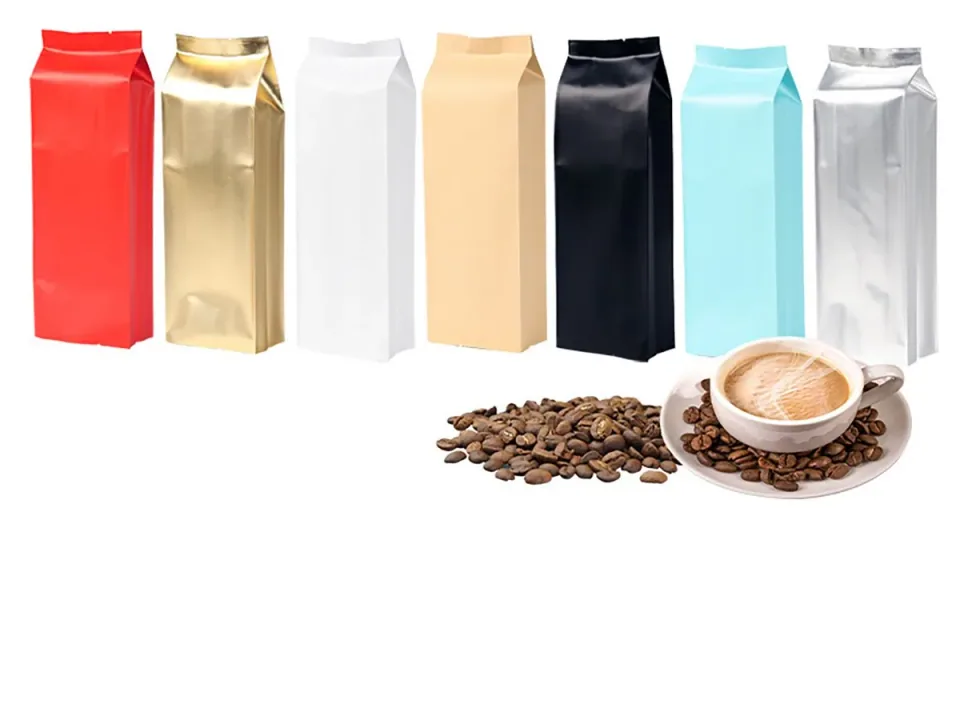
Choose a pouch or roll-film route from the product condition, aroma and moisture sensitivity, filling method, closure needs and shelf presentation—not from one universal coffee or tea specification.
Application Variables
Product Conditions That Change the Recommendation
These are discussion routes, not universal specifications. The packed product and filling process determine what should be confirmed.
Whole-bean roasted coffee
Aroma release, oxygen exposure and valve need should be reviewed with roast condition, packing timing and distribution.
Ground coffee
Particle size, aroma protection, fill density and clean sealing influence the usable pouch size and structure.
Loose-leaf tea
Moisture, aroma and light sensitivity can change the barrier direction; a coffee valve is generally not part of the tea brief.
Tea or coffee sachets
Dose, sachet dimensions, tear behavior and the packing machine determine whether pre-made flat pouches or roll stock are suitable.
Decision Matrix
Match Format, Protection and Packing Process
Use the matrix to prepare a technical discussion. No material combination, shelf life, MOQ or lead time is implied before product-specific review.
| Product condition | Suitable formats | Material direction | Barrier focus | Seal & packing process |
|---|---|---|---|---|
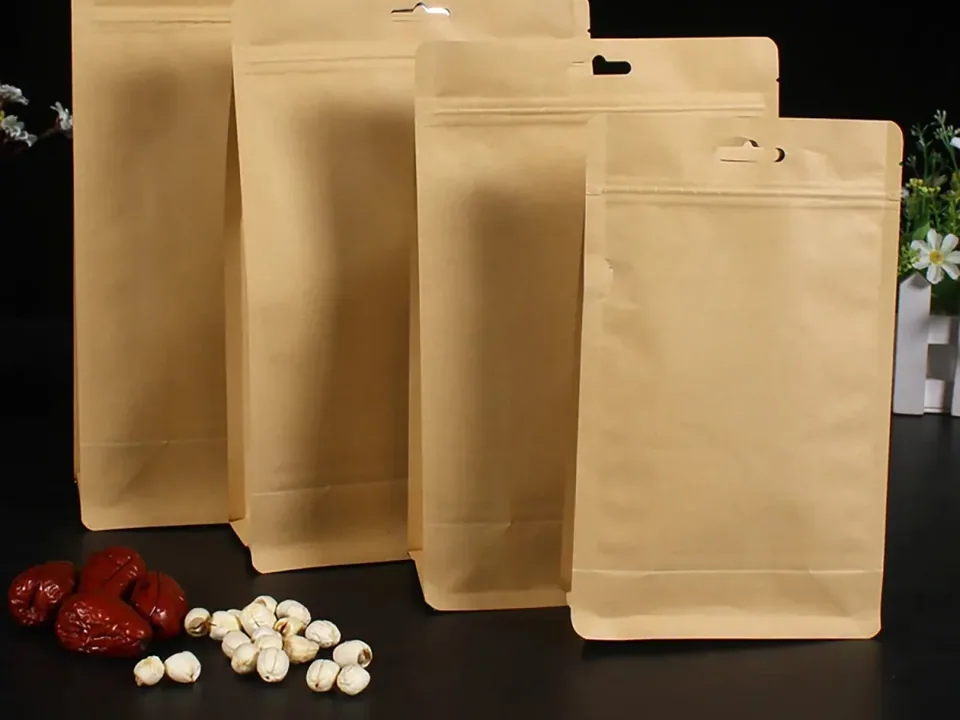
| Roasted whole bean | Flat bottom or side gusset pouch | Product-compatible laminated structure; kraft-look only with a confirmed inner barrier | Aroma, oxygen, moisture and light as required | Top heat seal; zipper for reuse; one-way valve only when the packed coffee and process require it |
| Ground coffee | Flat bottom, side gusset or stand-up pouch | Laminated structure selected for fine particles, product contact and print route | Aroma, oxygen and moisture | Clean seal area is critical; zipper depends on consumer use and pack size |
| Loose-leaf tea | Stand-up, flat bottom or side gusset pouch | Food-contact structure with a barrier direction matched to the tea | Moisture, aroma and light where relevant | Heat seal with optional zipper; validate leaf fragments around the seal |
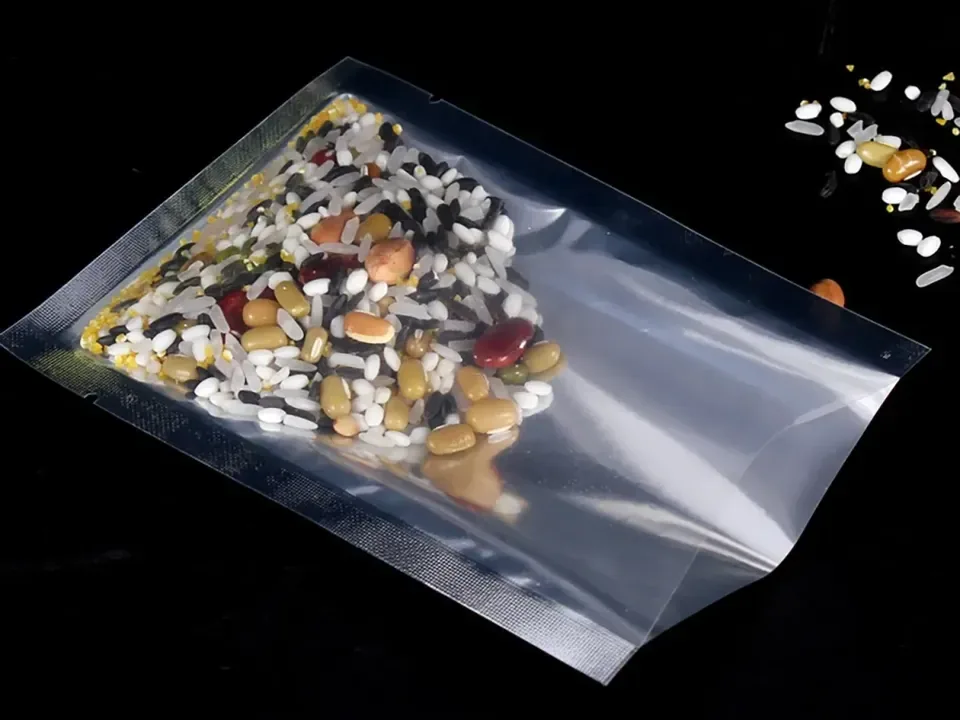
| Single-serve sachets | Three-side seal pouch or printed roll stock | Machine-compatible sealant and print structure | Moisture and aroma according to the dose and product | Confirm web dimensions, repeat length, unwind direction and machine sealing conditions |
Packaging Routes
Recommended Starting Points
Open the relevant product page for format details, then confirm the application-specific structure and process in the quotation.
Shelf-facing coffee bags
Compare flat bottom, side gusset and stand-up coffee bag options with zippers and conditional valves.
Review This Route →Flat bottom coffee bags
Review a stable shelf format when front-panel presentation and a defined base are important.
Review This Route →Automated sachet film
Use printed roll stock when the product will be packed on compatible form-fill-seal equipment.
Review This Route →Validation Workflow
From Product Brief to a Confirmed Pack
Quotation Checklist
Share the Inputs That Affect the Recommendation
Known details reduce assumptions. If an item is uncertain, mark it for recommendation rather than choosing an unverified specification.
- Coffee or tea type and condition at filling
- Target fill weight plus product density or a reference pack
- Preferred pouch style or packing-machine information
- Aroma, oxygen, moisture and light concerns
- Zipper, valve, tear notch and finish requirements
- Artwork status, estimated quantity and destination market
FAQ
Coffee and Tea Packaging Solutions Questions
Which bag styles are commonly used for coffee and tea?
Flat bottom, side gusset and stand-up pouches are common starting points. Three-side seal pouches or roll stock may suit sachets. The suitable format depends on the product, fill, presentation and packing process.
Does every coffee bag need a one-way degassing valve?
No. A one-way valve is considered for roasted coffee when gas release, packing timing and distribution make it relevant. Tea and some coffee formats do not require one; the decision is confirmed for the product and process.
Can kraft-look coffee or tea bags provide a high barrier?
A kraft-look appearance can be combined with an inner laminated structure. The required barrier and food-contact layers must be confirmed for the packed product and destination market.
Should I choose a zipper or a heat-sealed pouch?
A top heat seal supports first-opening integrity, while a zipper can help consumers reclose a multi-use pack. The closure combination depends on pack size, product behavior and intended use.
Can coffee or tea sachets run from printed roll stock?
Yes, when the film dimensions, repeat length, unwind direction and sealing layer match the packing machine and dose. Machine information and a line trial are used to confirm the route.
What information is needed for a coffee or tea packaging quotation?
Share the product, fill weight, preferred format, reference dimensions, barrier and closure needs, artwork, quantity, destination and filling method. Final specifications are confirmed for the order.
Build the Packaging Brief Around Your Product
Share the product, fill, pack format, barrier concerns and packing process in the form below.
Discuss Your Coffee and Tea Packaging Project
Share the product, target fill, format, barrier concerns, closure, packing method, artwork, estimated quantity and destination. The form does not submit automatically.